7″ x 9″
oil on panel
Available at the Dooryard Gallery in Elm Grove www.dooryardgallery.com/
contemporary landscapes
6.5″ x 10″
oil on panel
Sold!
9″ x 7″
oil on panel
Sold!
7″ x 9″
oil on panel
available for purchase through the Woodwalk Gallery in Egg Harbor
“Bad at Sports” is a contemporary art blog/podcast that presents interviews with artists, curators, collectors, and other important art biz folks. One recent interview stood out for me. It was with artist Hamish Fulton. Fulton is unique in that his art is walking. The pure experience of his walks is the art, which he often documents for presentation. In listening to Fulton talk about his work, I was struck by his profound connection to environment. I found that I had more in common with him then I may have expected. He gave a new perspective on the role of landscape in art. In understanding landscape for the purpose of art it is important to experience it fully, not to just paint it, draw it, or photograph it. Fulton reminded me of this and the lesson is a valuable one.
The interview can be downloaded here: http://badatsports.com/2011/episode-282-hamish-fulton/
Bad At Sports, Episode 282, January 26, 2011
7″ x 11″
pastel on paper
$195.00 via PayPal
$5.00 shipping within US
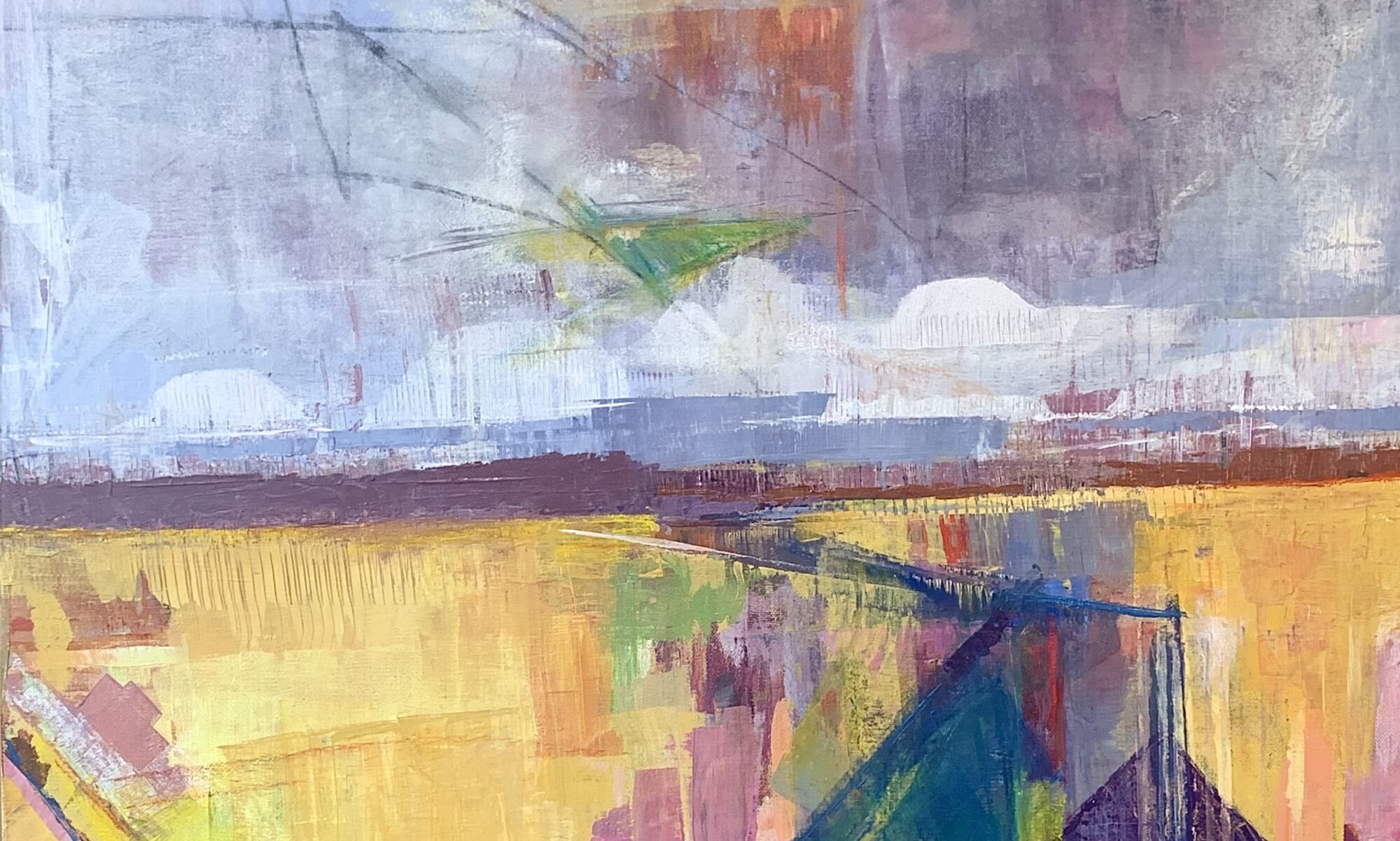
One thing I don’t think I have ever talked much about is my technique. So here are some thoughts of process…. Most of my paintings are on panel, though occasionally I use canvas. Panel, with it’s rigidity, works a little better with the weight of the paint and pressure used while applying it. I start with a panel primed with acrylic, usually I use a warm orange or red. With a white pencil I gently sketch out the composition. In my mind I map out the color relationships based on what I see. Whether painting en plein air or in the studio, I look for interesting color patterns and plan if there are any I will exaggerate for dramatic effect.
To begin painting, I start with the sky. I mix the color using a palette knife. This color is most critical as it sets the tone of the rest of the painting. I often spend a long time mixing this color until I am satisfied. Because my work is small, I often pick it up off the easel. I spread the paint on with a knife, using the knife’s edge to define the horizon. It is like spreading peanut butter on bread.
I move on to middle ground and foreground, in that order, mixing each color as I go. I save complicated shrubbery or trees for last. All is done with a knife. For detailed pattern I mix the paint directly on the panel. The paint is often thick and applied with an impasto style. While holding the painting in my hand I can rotate it freely to get different directions of stroke. I have to accomplish most of the painting in one go, as it will start to dry within a day. The textured surface makes it difficult to work on once the drying process starts. It takes several weeks for the painting to be completely dry.
Image: Chromascape 67, detail
oil on panel
7” x 9”
$350.00 via PayPal
$10.00 shipping within US
7″ x 9″
oil on panel
$315.00 via PayPal
$10.00 shipping within US
9″ x 7″
oil on panel
$315.00 via PayPal
$10.00 shipping within US
“Those who carry on their work as a demonstration of preconceived thesis may have the joys of egotistic success but not the fulfillment of an experience for its own sake.”
John Dewey, Art as Experience, p.144
I found this quote tucked in the binding of an old journal last week. I returned to it again today after a frustrating morning in battle with a painting. In an attempt to grow – and not just produce hundreds of little paintings that I know will work- I tried a larger piece again today. I used a bigger knife, larger shapes; all of the things I thought would fix the problem. I had progress, but not complete success. But today I remind myself that this is necessary for the journey.
7″ x 9″
oil on panel
available for purchase through the Woodwalk Gallery in Egg Harbor
12″ x 36″
oil on canvas
$525.00 via PayPal
$25.00 shipping within US
I am currently reading Jay Appleton’s The Experience of Landscape. This 1975 text delves into the Prospect-Refuge Theory of Appleton’s. This theory suggests that there are biological, instinctual reasons for our appreciation of landscape. Appleton writes that we create symbols of prospect and refuge and these symbols filter our aesthetic interest in landscape.
“The strategic value of a landscape, therefore, whether natural or man-made, is related to the arrangement of objects which combine to provide collectively these two kinds of opportunity, [prospect and refuge] and when this strategic value ceases to be essential to survival it continues to be apprehended aesthetically.” (Appleton, 74)
Appleton goes on to analyze landscape in a very formulaic way. While I find the idea very compelling, it is still a little to simplistic for me. I always imagined our emotional and aesthetic reactions to be more complex. I am, of course, not done with the book yet and look forward to the rest of Appleton’s discussion.
oil on canvas
12″ x 36″
Sold!
8″ x 11.5″
oil on panel
Sold!
8.5″ x 6″
oil on panel
$315.00 via PayPal
$10.00 shipping within US
The are the panels I use to create the smaller Chromascape paintings. I start out painting the panel with acrylic. I originally used just red and orange to get the warm under painting. Now I have begun using greens and blues as well. I often select the compliment of the landscape palette as the under painting hue. This intensifies the color I put on top of it. For example, if my Chromascape is based on purples, the panel I start with will likely be yellow.
A great deal has been written about why humans are so moved by the site of landscape. In my recent immersion into landscape painting I have looked more seriously at the potential reasons for this. I have begun reading such authors as Jay Appleton, who wrote The Experience of Landscape. Appleton is known for the “prospect- refuge theory” which describes an evolutionary response to landscape. Prospect defines our desire to perceive large expanses. Refuge refers to our need for security and comfort. I am just beginning to read the text more completely, but I have to say that my initial response to this theory is that it is too simplistic.
This is a recent sketchbook drawing, in preparation for a painting. I am combining an appreciation of landscape with a decisive approach to color and form. There is a relationship to art that I think can inform our appreciation of landscape beyond pure evolutionary concerns, but without descending into mysticism.
7″ x 11″
pastel on paper
8″ x 11.5″
oil on panel
$350.00 via PayPal
$10.00 shipping within US